


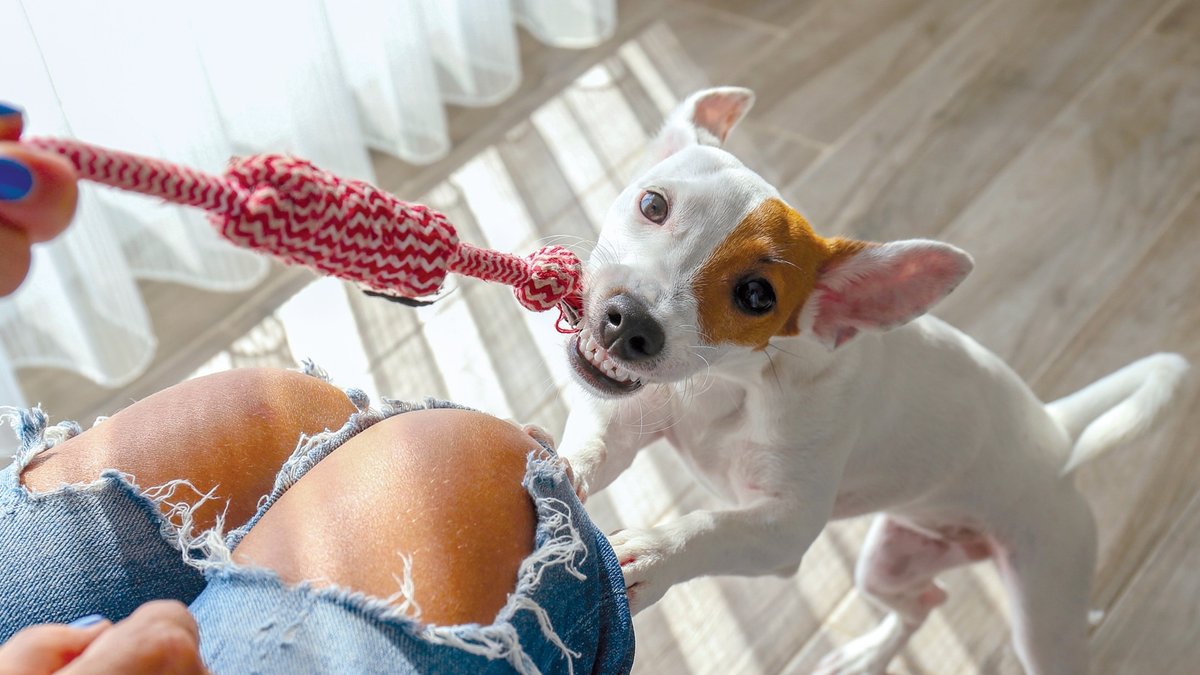
Is tug of war bad for dogs? The short answer is no, provided you play correctly. For most healthy dogs, the game offers physical exercise and mental stimulation, strengthens the bond between pet and owner, and can serve as a high-value training reward for dogs that aren’t food motivated. Trainers agree that tug is a safe activity that builds confidence, though it does require specific rules to prevent injury or bad habits.
Why the game is safe for most pets
Many dog owners grow up with the warning that playing tug will make a dog dominant or aggressive. A professional trainer says that concern is a myth. In fact, the activity creates a positive experience where engaging with the owner is fun. The game can even help behavior modification programs by using joy to counteract fear in specific locations or around certain objects, like a car.
A standard rope toy made of soft material works well. It should have knots at both ends to give the dog a good grip. The surface needs to be non-slippery, like carpet or grass, so the dog’s paws can gain purchase. You should keep the toy in a drawer until you are ready to play. This makes it a high-value item that the dog only gets during specific sessions.
Related: Staffordshire Terriers vs Bull Terriers: The Key Differences
One common mistake owners make is jerking the rope upwards, which can hurt the dog’s neck or spine. Instead, drag the toy along the floor away from the dog in a zig-zagging motion to encourage them to chase it. Once the dog has latched on, let them do most of the pulling. Use a gentle side-to-side motion, which is natural for dogs. Avoid playing if the animal has neck, back, or spinal issues like arthritis.
The rules of the game
It is normal for dogs to get excited, but they must learn to control their mouths. If a tooth touches the owner’s skin, the game must end immediately. The owner should say “Too bad!” and put the toy away. This teaches the dog that there are consequences for biting too hard. They can control their mouths even when overstimulated if they learn the rules early.
Another rule contradicts the idea that dogs will dominate their owners. The trainer suggests letting your dog win sometimes. It is hard to enjoy a game you never win. Winning builds confidence and allows the dog to share the toy. After releasing the toy, the dog might run off with it. The owner should not chase them, though they can run the other way to encourage a return. If the dog keeps the toy, the owner simply retrieves it later.
Related: Matt Davies Harmony Communities Discusses the Dietary Requirements of Kittens Versus Adult Cats
The game can also serve as a distraction during training. If a dog struggles to pass other dogs calmly on a walk, the owner can keep a toy ready. When the dog ignores a passing dog at a comfortable distance, the owner offers the toy for a quick tug. This rewards the calm behavior and ends the game, allowing the walk to continue.
While the benefits are clear, tug isn’t right for every dog. Owners should steer clear if the pet has neck or spinal problems. Rope toys can also pose a risk if the strands are ingested, so they must be kept out of reach when not in use.


