


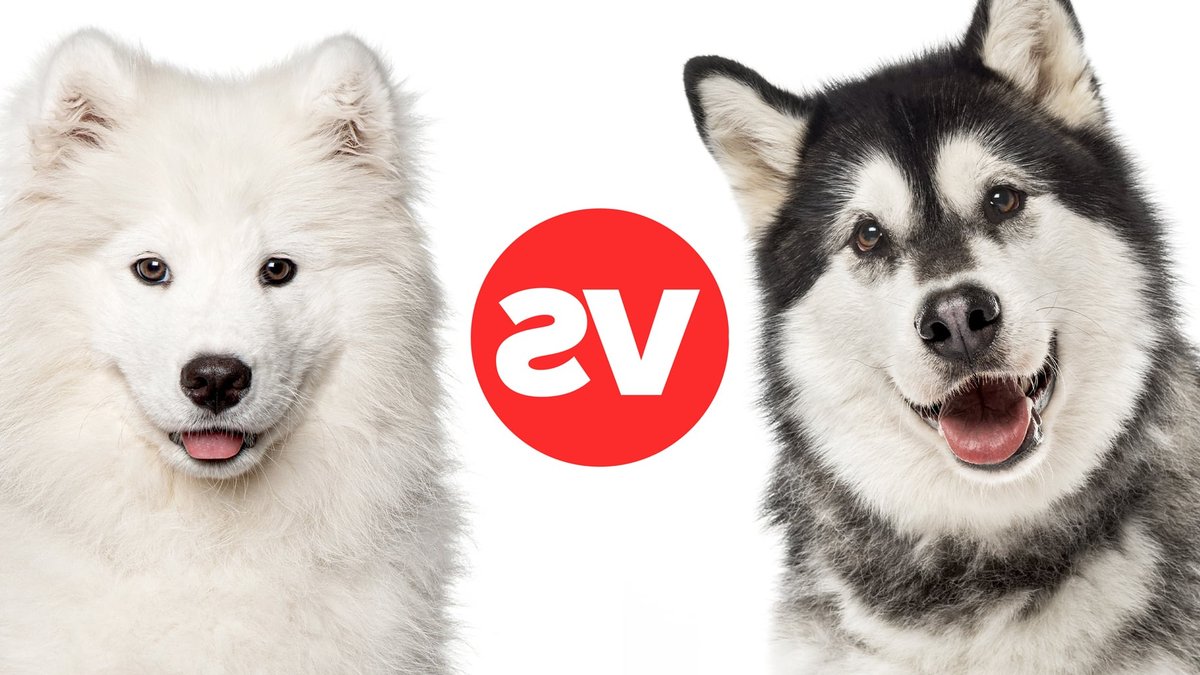
The Alaskan Malamute and the Samoyed often get confused because they share a snowy history and similar coats, but the two breeds serve different purposes and possess distinct temperaments. The Alaskan Malamute is a heavy-duty working animal built for hauling heavy loads across frozen terrain, while the Samoyed was bred by nomadic tribes in Siberia to be a companion and herder, known for its trademark smile. Understanding the differences between the Alaskan Malamute and the Samoyed helps potential owners determine which breed fits their lifestyle better.
Size and build are the most immediate differences. The Alaskan Malamute is a massive animal, weighing between 75 and 85 pounds with a deep chest and heavy bone structure. They were developed to be arctic sled dogs of par excellence. In contrast, the Samoyed is more agile and lighter, typically weighing between 35 and 65 pounds. Despite the size difference, both breeds feature the thick, waterproof double coat that protects them from extreme cold, though the Samoyed’s coat is often cited as denser to withstand temperatures that can plummet to minus 60 degrees.
Temperament and Personality
Both dogs are affectionate and loyal, but their personalities diverge significantly. The Samoyed is described by the American Kennel Club as a “smart, social, mischievous dog who demands love and attention.” They are generally friendly and trusting, with an easygoing disposition and a sense of humor. They want to stick close to their people, a trait derived from their history sleeping next to their human owners in the arctic cold. The Alaskan Malamute is also affectionate but tends to be more independent and reserved, particularly with strangers. While the Malamute is gentle and great with kids when well-trained, they possess a serious demeanor and can be a bit stubborn.
Both breeds require significant daily exercise due to their working heritage. The Malamute needs intense physical activity like long runs or hikes to satisfy their endurance, while the Samoyed is also energetic and will run for miles but can adapt to moderate activity if mentally stimulated. However, the Samoyed’s trademark upturned mouth serves a practical purpose; it prevents drooling so that icicles do not form on his face during extreme cold. This breed is not a guard dog, as they are naturally trusting, whereas the Malamute’s larger size and history of heavy-duty work give them a different presence.
Related: Carshalton’s Blossoming Bonds: Lab Grown Engagement Rings
For the family living in a cold climate, choosing between these two breeds often comes down to how much space and leadership they can provide. The Samoyed, being smaller and more playful, might fit better in a standard home, but the Malamute’s independent nature requires an owner who is willing to take a leadership role from day one. The Samoyed generally adapts well to a more moderate activity level, whereas the Malamute demands rigorous physical exertion. Prospective owners must be prepared for a lot of grooming, as both dogs have impressive coats that need daily brushing and seasonal raking to manage shedding.
The Samoyed’s social nature makes them a great fit for households with other pets, but their high energy levels necessitate a secure yard to run in. Because they were bred to work in packs, they do not do well when left alone for long periods, which can lead to destructive behavior. Their history as companions means they thrive on interaction, much like a dog that sees the world differently. In comparison, the Alaskan Malamute is more stoic and can sometimes seem aloof, preferring to observe rather than participate in constant play. Their working background means they are less likely to jump up on furniture compared to their smaller cousins.
Training these powerful animals requires consistency and patience. The Samoyed is eager to please but can be easily distracted by smells or new people, which makes training sessions a test of the owner’s focus. The Malamute, while intelligent, has a strong will and will test boundaries to see what they can get away with. Neither breed is suited for an inexperienced handler who cannot establish clear rules. Both the Samoyed and the Malamute share a heritage of living outdoors in harsh conditions, yet they have successfully adapted to indoor living with the right care.


